Showing posts with label saints. Show all posts

Saturday, November 12, 2016

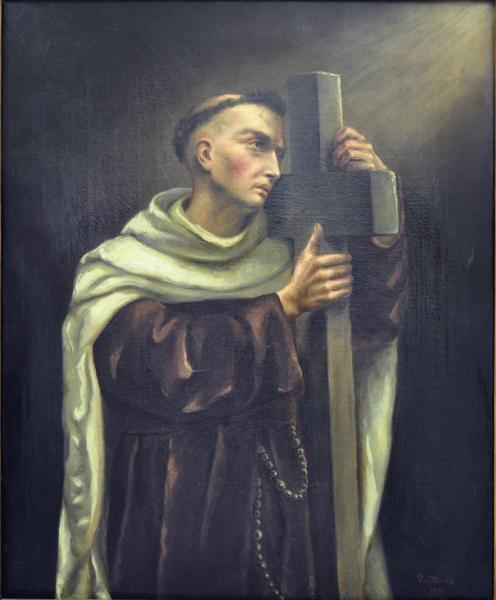
ST JOSAPHAT - NOVEMBER 12


Memorial of St Josaphat – November 12 
He became bishop of Vitebsk at a relatively young age and faced a difficult situation. Most monks, fearing interference in liturgy and customs, did not want union with Rome. By synods, catechetical instruction, reform of the clergy and personal example, however, Josaphat was successful in winning the greater part of the Orthodox in that area to the union. 
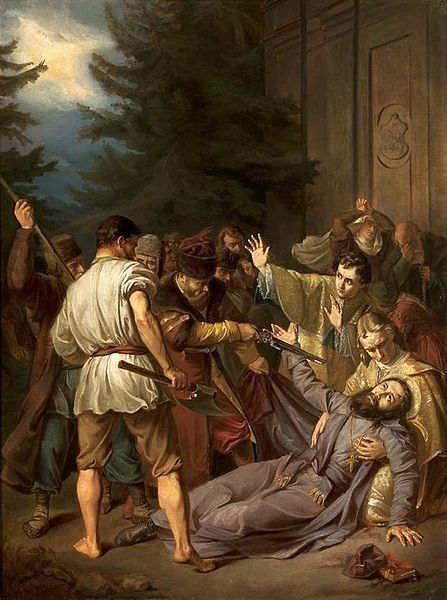
But the next year a dissident hierarchy was set up and his opposite number spread the accusation that Josaphat had “gone Latin” and that all his people would have to do the same. He was not enthusiastically supported by the Latin bishops of Poland. Despite warnings, he went to Vitebsk, still a hotbed of trouble. Attempts were made to foment trouble and drive him from the diocese: A priest was sent to shout insults to him from his own courtyard. When Josaphat had him removed and shut up in his house, the opposition rang the town hall bell and a mob assembled. The priest was released but members of the mob broke into the bishop’s home. Josaphat was struck with a halberd, then shot and his body thrown into the river. It was later recovered and is now buried in St. Peter’s Basilica in Rome. He was the first saint of the Eastern Church to be canonised by Rome. His death brought a movement toward Catholicism and unity but the controversy continued .

Sunday, August 14, 2016

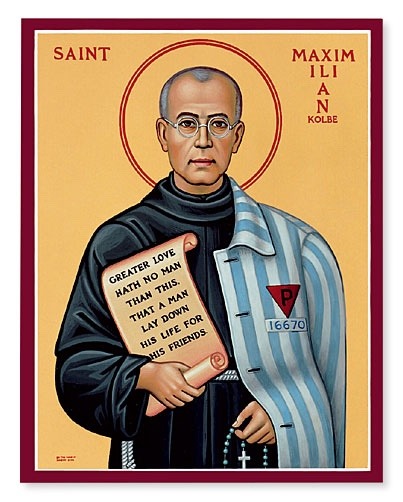
CHOICE OF ST MAXIMILLIAN KOLBE


“That night, I asked the Mother of God what was to become of me, a Child of Faith. Then she came to me holding two crowns, one white, the other red. She asked me if I was willing to accept either of these crowns. The white one meant that I should persevere in purity, and the red that I should become a martyr. I said that I would accept them both.”

Thursday, January 28, 2016

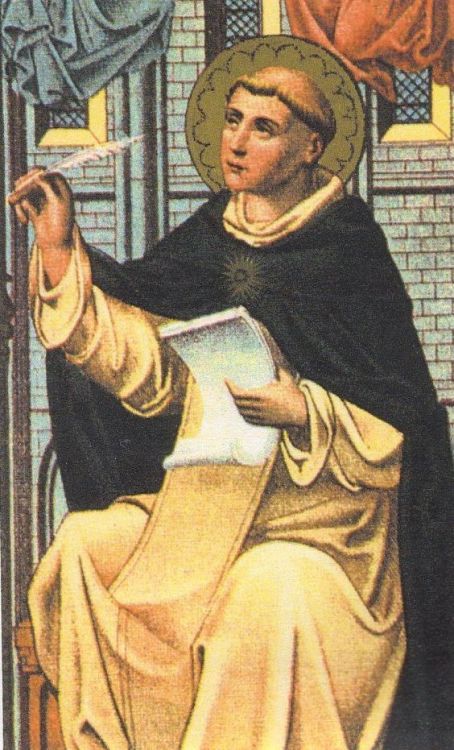
ST TH0OMAS AQUINAS - FEASTDAY 28TH JANUARY


Since free, he went to Paris and then to Cologne, where he finished his studies with Albert the Great. He held two professorships at Paris, lived at the court of Pope Urban IV, directed the Dominican schools at Rome and Viterbo, combated adversaries of the mendicants, as well as the Averroists, and argued with some Franciscans about Aristotelianism.

His greatest contribution to the Catholic Church is his writings. The unity, harmony and continuity of faith and reason, of revealed and natural human knowledge, pervades his writings. One might expect Thomas, as a man of the gospel, to be an ardent defender of revealed truth. But he was broad enough, deep enough, to see the whole natural order as coming from God the Creator, and to see reason as a divine gift to be highly cherished.

The Summa Theologiae, his last and, unfortunately, uncompleted work, deals with the whole of Catholic theology. He stopped work on it after celebrating Mass on December 6, 1273. When asked why he stopped writing, he replied, “I cannot go on…. All that I have written seems to me like so much straw compared to what I have seen and what has been revealed to me.” He died March 7, 1274.

Wednesday, January 27, 2016

ST ANGELA MERICI - FEASTDAY 27TH JANUARY


Angela was born in the small Italian town of Desenzano, Italy, around 1474. Her parents died when she was ten. She and her only sister, who was three years older, loved each other very much. A wealthy uncle took the girls into his home. Still suffering from the loss of her parents, Angela was struck again when her sister also passed away.
The older girl had died even before a priest could arrive to administer the last sacraments. Angela worried about her sister’s soul. Jesus revealed to her that the girl had been saved. Angela felt peace return to her own soul. She thanked the Lord in prayer. She wanted to do something to show her gratitude. This desire led her to promise to spend the rest of her life serving Jesus totally.

At that time there were no religious orders of teaching sisters. No one had ever thought of such a thing. St. Angela Merici was the first to gather together a group of women to open schools for children. On November 25, 1535, twenty-eight young women offered their lives to God. It was the beginning of the Ursuline order. Angela placed the congregation under the protection of St. Ursula. This is how they got their name. The women remained in their own homes at first. Because of many difficulties, it was a long time before they could live together in a convent. Angela died on January 27, 1540, when her congregation was still in its beginning stages. Her trust in God had gotten her through many hard tests in her lifetime. There was no doubt in her mind that the Lord would take care of the mission she had begun. And so he did.
The Ursuline Sisters have spread to many countries. The order continues its works for Jesus and his Church, especially in the education of children and young adults. Angela was proclaimed a saint by Pope Pius VI in 1807.
She was also a member of the Third Order of St Francis and so we remember her fellow Franciscans today 

Sunday, January 24, 2016

ST FRANCIS DE SALES - FEASTDAY 24TH JANUARY


Francis was born at the de Sales castle in Savoy, France, on August 21, 1567. By the age of twenty-four, Francis was a Doctor of Law. He returned to Savoy and led a hard-working life. He did not seem interested in important positions or a social life. In his heart, Francis was listening to a call that kept coming back like an echo. It seemed to be an invitation from the Lord to become a priest. Francis finally tried to explain his struggle to his family. His father was very disappointed. He wanted Francis to be a great man of the world. Family influence could have accomplished that goal. Instead, Francis became a priest on December 18, 1593.
Father de Sales lived in times when Christians were bitterly divided. He volunteered to go to a dangerous area of France to win back Catholics who had become Protestants. His father protested. He was not going to let him be a martyr. But Francis believed that the Lord would protect him. He and his cousin, Father Louis de Sales, set out on foot. The two priests soon learned how to live with insults and physical discomforts. Their lives were frequently in danger. Little by little, however, people returned to the Church. 

At 35 he became Bishop of Geneva. While administering his diocese he continued to preach, hear confessions and catechize the children. His gentle character was a great asset in winning souls. He practiced his own axiom, “A spoonful of honey attracts more flies than a barrelful of vinegar.”
Besides his two well-known books, the Introduction to the Devout Life and A Treatise on the Love of God, he wrote many booklets and carried on a vast correspondence. For his writings, he has been named patron of the Catholic Press. His writings, filled with his characteristic gentle spirit, are addressed to lay people. He wants to make them understand that they too are called to be saints. In spite of his busy and comparatively short life, he collaborated St Jane Frances de Chantal (August 12), in establishing the Sisters of the Visitation. These women were to practice the virtues exemplified in Mary’s visit to Elizabeth: humility, piety and mutual charity. They at first engaged to a limited degree in works of mercy for the poor and the sick. Today, while some communities conduct schools, others live a strictly contemplative life. 

Wednesday, January 20, 2016

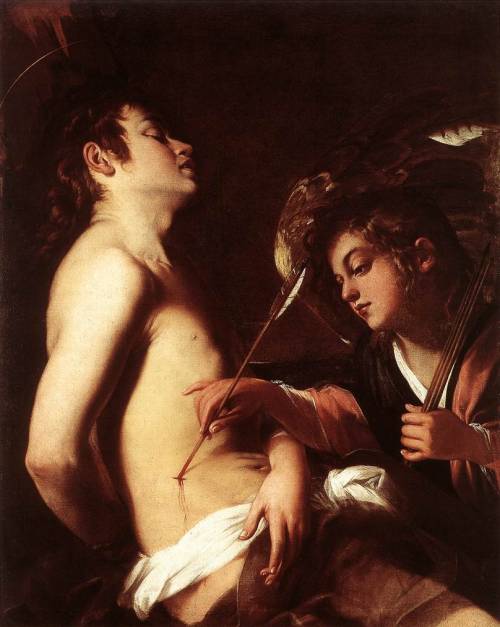
ST SEBASTIAN - FEASTDAY 20TH JANUARY

Almost nothing is historically certain about St. Sebastian except that he was a Roman martyr, was venerated in Milan even in the time of St. Ambrose (December 7) and was buried on the Appian Way, probably near the present Basilica of St. Sebastian. Devotion to him spread rapidly, and he is mentioned in several martyrologies as early as a.d. 350.

The legend of St. Sebastian is important in art, and there is a vast iconography. Scholars now agree that a pious fable has Sebastian entering the Roman army because only there could he assist the martyrs without arousing suspicion. Finally he was found out, brought before Emperor Diocletian and delivered to Mauritanian archers to be shot to death. His body was pierced with arrows, and he was left for dead. But he was found still alive by those who came to bury him. He recovered, but refused to flee. One day he took up a position near where the emperor was to pass. He accosted the emperor, denouncing him for his cruelty to Christians. This time the sentence of death was carried out. Sebastian was beaten to death with clubs. He was buried on the Appian Way, close to the catacombs that bear his name.


Thursday, January 14, 2016

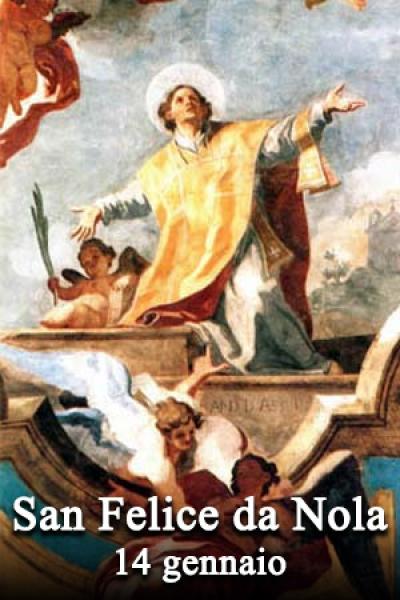
ST FELIX OF NOLA - FEASTDAY 14TH JANUARY

Felix was the son of Hermias, a Syrian who had been a Roman soldier. He was born at Nola near Naples, Italy. On the death of his father, Felix distributed his inheritance to the poor, was ordained by St. Maximus of Nola and became his assistant. When Maximus fled to the desert at the beginning of Decius’ persecution of the Christians in 250, Felix was seized in his stead and imprisoned. He was reputedly released from prison by an angel, who directed him to the ailing Maximus, whom he brought back to Nola. Even after Decius’ death in 251, Felix was a hunted man but kept well hidden until the persecution ended. When Maximus died, the people unanimously selected Felix as their Bishop, but he declined the honour in favour of Quintus, a senior priest. Felix spent the rest of his life sharing what he had with the poor and died there on January 14. His tomb soon became famous for the miracles reported there, and when St. Paulinus became bishop of Nola almost a century later (410), he wrote about his predecessor, the source of our information about him, adding legendary material that had grown up about Felix. 

Tuesday, January 12, 2016

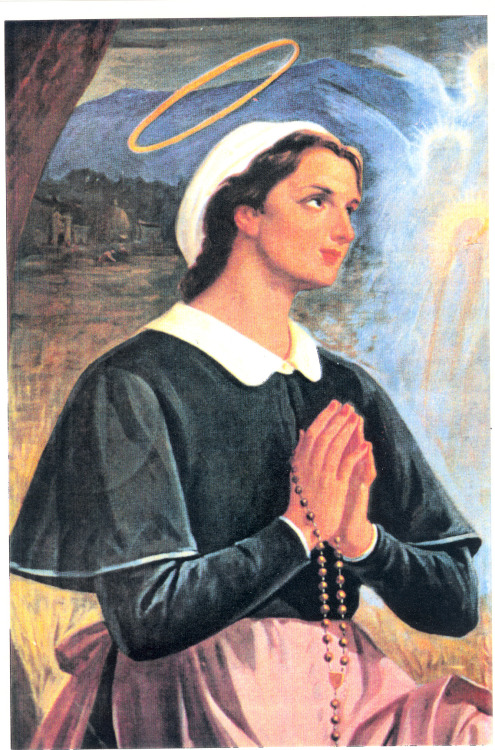
ST MARGUERITE BOURGEOYS - FEASTDAY 12TH JANUARY


Marguerite was born in Troyes, France, on April 17, 1620, but spent most of her eighty years in Montreal, Canada. Marguerite was the sixth of twelve children. When Marguerite was nineteen, her mother died. Marguerite took care of her younger brothers and sisters

At the age of twenty, Margaret Bourgeoys, of Troyes, France, was walking in a procession for the feast of the Holy Rosary when her gaze fell upon a statue of the Blessed Virgin Mary atop a gate. The statue appeared to come to life, as Margaret saw Mary’s eyes tenderly gaze upon her. The mysterious incident changed her life, as she would later attest: “I gave myself to God in the year 1640.” After two convents had refused her requests for admission, she was asked to undertake a school-teaching apostolate in Canada. Agonizing over this decision, Margaret finally became convinced that the Canadian mission was God’s will for her while praying during exposition of the Blessed Sacrament. In 1653 Margaret journeyed to Canada. It was there that she founded a new congregation dedicated to the education and spiritual formation of young women, the Sisters of Notre Dame. Among the many religious and moral values she inculcated in her pupils was that of Christian modesty, establishing for the girls a “League of Modest Fashion.” The students made a pledge of modesty while prostrate before an altar of the Blessed Virgin. 

St. Marguerite and her sisters helped people in the colony survive when food was scarce. They opened a vocational school and taught young people how to run a home and farm. St. Marguerite’s congregation was growing. By 1681 there were eighteen sisters. Seven were Canadian. They opened more missions and two sisters taught at the Indian mission. St. Marguerite herself received the first two Indian women into the congregation.
In 1693, Mother Marguerite handed over her congregation to her successor. The new superior was Marie Barbier, the first Canadian to join the order. St. Marguerite’s religious rule was approved by the Church in 1698. Marguerite spent her last few years praying and writing an autobiography. On the last day of 1699, a young sister lay dying. Mother Marguerite asked the Lord to take her life in exchange. By the morning of January 1, 1700, the sister was completely well. Mother Marguerite had a raging fever. She suffered for twelve days and died on January 12, 1700. She was declared a saint by Pope John Paul II on April 2, 1982. Image 1 - Portrait by Pierre Le Ber (1700) 

Thursday, January 7, 2016

ST RAYMOND PENYAFORT - FEASTDAY 7TH JANUARY

Raymond was born between 1175 and 1180 in a little town near Barcelona, Spain. He was educated at the cathedral school in Barcelona and became a priest. Raymond graduated from law school in Bologna, Italy, and became a famous teacher. He joined the Dominican order in 1218. In 1230, Pope Gregory IX asked this dedicated priest to come to Rome. When Raymond arrived, the pope gave him several assignments. One duty was to collect all the official letters of the popes since 1150. Raymond gathered and published five volumes. He also took part in writing Church law.
In 1238, Raymond was elected master general of the Dominicans. With his knowledge of law, he went over the order’s rule and made sure everything was legally correct. After he had finished, he resigned his position in 1240. Now he could truly dedicate the rest of his life to parish work. That is what he really wanted. 

Wednesday, January 6, 2016

ST ANDREBESSETTE - FEASTDAY 6TH JANUARY


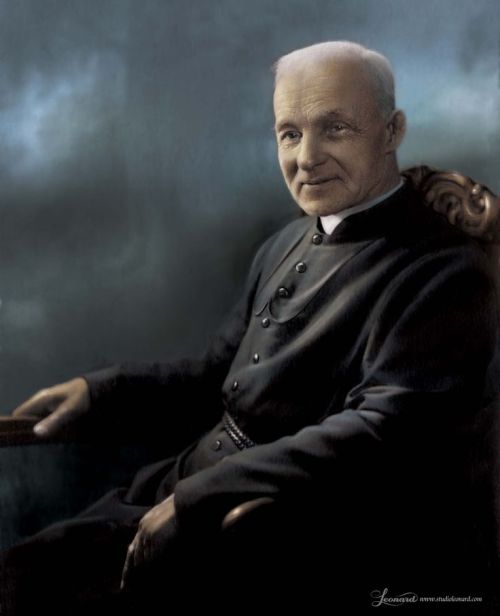
Alfred Bessette was born on August 9, 1845, near Montreal, Canada. He was the eighth of twelve children. When Alfred was nine, his father, a wood cutter, died in an accident at work. Three years later, Alfred’s mother died of tuberculosis, leaving the children orphans. They were split up and placed in different homes. Alfred went to live with his aunt and uncle. Because his family had been so poor and he was often sick, Alfred had very little education. 
So for the next thirteen years he tried learning different trades like farming, shoemaking and baking. But his health and illiteracy always failed him. When Alfred was twenty-five, he joined the order of Holy Cross and chose the name Brother Andre. He spent the next forty years as the doorkeeper for the order’s college. Here, Brother Andre’s healing power became known. 
When people came to ask him for a cure, he would tell them to first thank God for their suffering because it was so valuable. Then he would pray with them. Most of them were cured. Brother Andre always refused credit for the healing. He insisted it had been the person’s faith and the power of St. Joseph. 

Tuesday, January 5, 2016

ST JOHN NEUMANN - FEASTDAY 5TH JANUARY

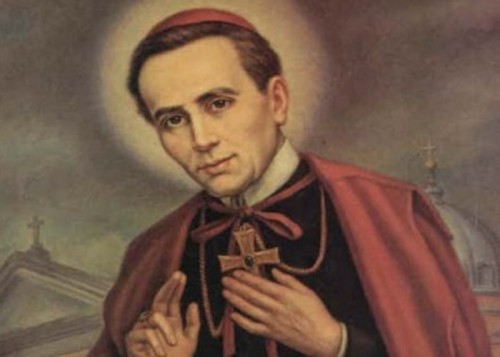
The farms in his area were far apart. John had to walk long distances to reach his people. They were German, French, Irish and Scotch. In school, John had learned eight languages. Now he added English and Gaelic. Before he died, he knew twelve languages. John joined the Redemptorist order and continued his missionary work. He became bishop of Philadelphia in 1852. Bishop Neumann built fifty churches and began building a cathedral. He opened almost one hundred schools, and the number of parochial school students grew from five hundred to nine thousand. Bishop Neumann’s health never improved much, but people were still very surprised when he died suddenly on January 5, 1860. He was walking home from an appointment when he fell to the ground with a stroke. He was carried into the nearest house and died there at 3:00 P.M. In March Bishop Neumann would have been forty-nine. He was proclaimed a saint by Pope Paul VI on June 19, 1977.

Tuesday, December 29, 2015

ST THOMAS BECKET - FEASTDAY 29TH DECEMBER

Thomas Becket also known as Saint Thomas of Canterbury, Thomas of London, and later Thomas à Becket; 21 December c. 1119 (or 1120) – 29 December 1170) was Archbishop of Canterbury from 1162 until his murder in 1170.

 He is venerated as a saint and martyr by both the Catholic Church. He engaged in conflict with Henry II of England over the rights and privileges of the Church and was murdered by followers of the king in Canterbury Cathedral. 

When the angry King said “Will no one rid me of this archbishop?” some of his knights took him seriously. They went off to murder the archbishop. They attacked him in his own cathedral.

He died, saying, “For the name of Jesus and in defense of the Church, I am willing to die.” It was December 29, 1170.


The entire Christian world was horrified at such a crime. Pope Alexander III held the king personally responsible for the murder.


Miracles began to happen at Thomas’ tomb. He was proclaimed a saint by the same pope in 1173. 


Soon after his death, he was canonised by Pope Alexander III. 

Monday, December 14, 2015

ST JOHN OF THE CROSS - FEASTDAY 14TH DECEMBER

Born in Spain in 1542, John learned the importance of self-sacrificing love from his parents. His father gave up wealth, status, and comfort when he married a weaver’s daughter and was disowned by his noble family. After his father died, his mother kept the destitute family together as they wandered homeless in search of work. These were the examples of sacrifice that John followed with his own great love — God.
When the family finally found work, John still went hungry in the middle of the wealthiest city in Spain. At fourteen, John took a job caring for hospital patients who suffered from incurable diseases and madness. It was out of this poverty and suffering, that John learned to search for beauty and happiness not in the world, but in God. 


After John joined the Carmelite order, Saint Teresa of Avila asked him to help her reform movement. John supported her belief that the order should return to its life of prayer. But many Carmelites felt threatened by this reform and some kidnapped him. He was locked in a cell six feet by ten feet and beaten three times a week. There was only one tiny window high up near the ceiling. Yet in that unbearable dark, cold, and desolation, his love and faith were like fire and light. He had nothing left but God — and God brought John his greatest joys in that tiny cell. After nine months, John escaped. Taking only the mystical poetry he had written in his cell, he climbed out a window using a rope made of stirps of blankets. He hid from pursuers in a convent infirmary where he read his poetry to the nuns. His life was devoted to sharing and explaining his experience of God’s love. This persecution could have produced a bitter cynic. Instead it gave birth to a compassionate mystic, who lived by “Who has ever seen people persuaded to love God by harshness?” and “Where there is no love, put love — and you will find love.”

Sunday, December 13, 2015

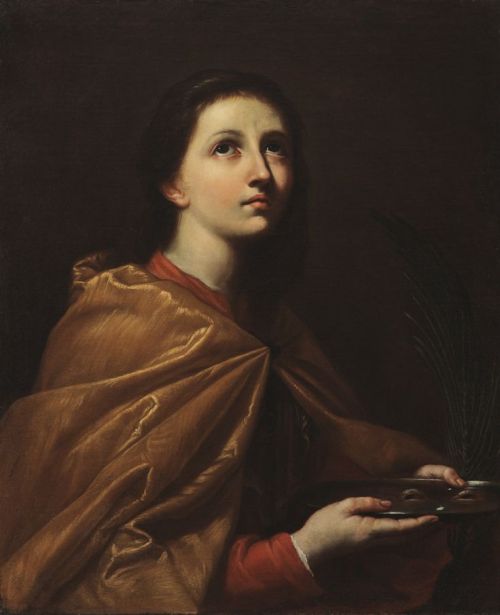
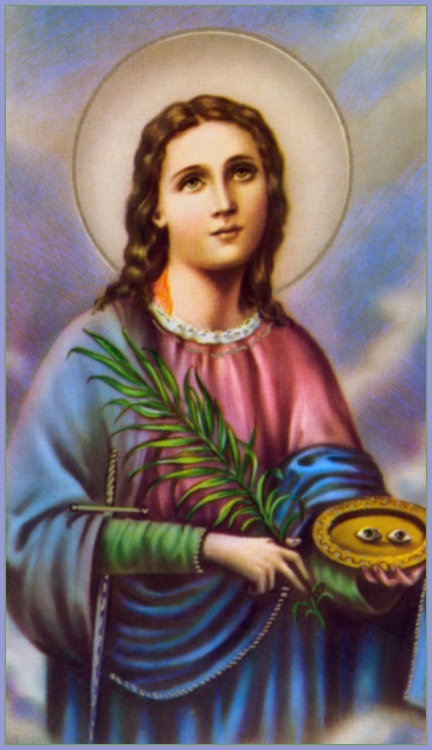
ST LUCY - FEASTDAY 13TH DECEMBER

Lucy’s history has been lost and all we really know for certain is that this brave woman who lived in Syracuse lost her life during the persecution of Christians in the early fourth century. Her veneration spread to Rome so that by the sixth century the whole Church recognized her courage in defense of the faith.
Because people wanted to shed light on Lucy’s bravery, legends began to crop up. The one that has passed the test of time tells the story of a young Christian woman who vowed to live her life in service of Christ. Her mother tried to arrange a marriage for her with a pagan and Lucy knew her mother could not be swayed by a young girl’s vow, so she devised a plan to convince her mother that Christ was the better partner for life.
After several prayers at the tomb of Saint Agatha, Lucy saw the saint in a dream. St. Agatha told Lucy her mother’s illness would be cured through faith, which Lucy used to persuade her mother to give the dowry money to the poor and allow her to commit her life to God. 


Lucy’s rejected bridegroom was deeply angered and betrayed Lucy’s faith to the governor Paschasius. The governor attempted to force her into defilement at a brothel, but the guards who came to take her away were unable to move her, even after hitching her to a team of oxen.
The guards heaped bundles of wood around her but it wouldn’t burn so they finally resorted to their swords and Lucy met her death.
It is widely known that during her lifetime Christians were persecuted for their faith. They were forced to endure horrific torture and often met painful ends during Diocletian’s reign. Though the details surrounding her death remain only as legends, it is all modern-day Christians can rely on.

According to later accounts, Lucy warned Paschasius he would be punished. When the governor heard this he ordered the guards to gouge out her eyes; however, in another telling, it was Lucy who removed her eyes in an attempt to discourage a persistent suitor who greatly admired them. When her body was being prepared for burial, they discovered her eyes had been restored. 

Saturday, December 12, 2015

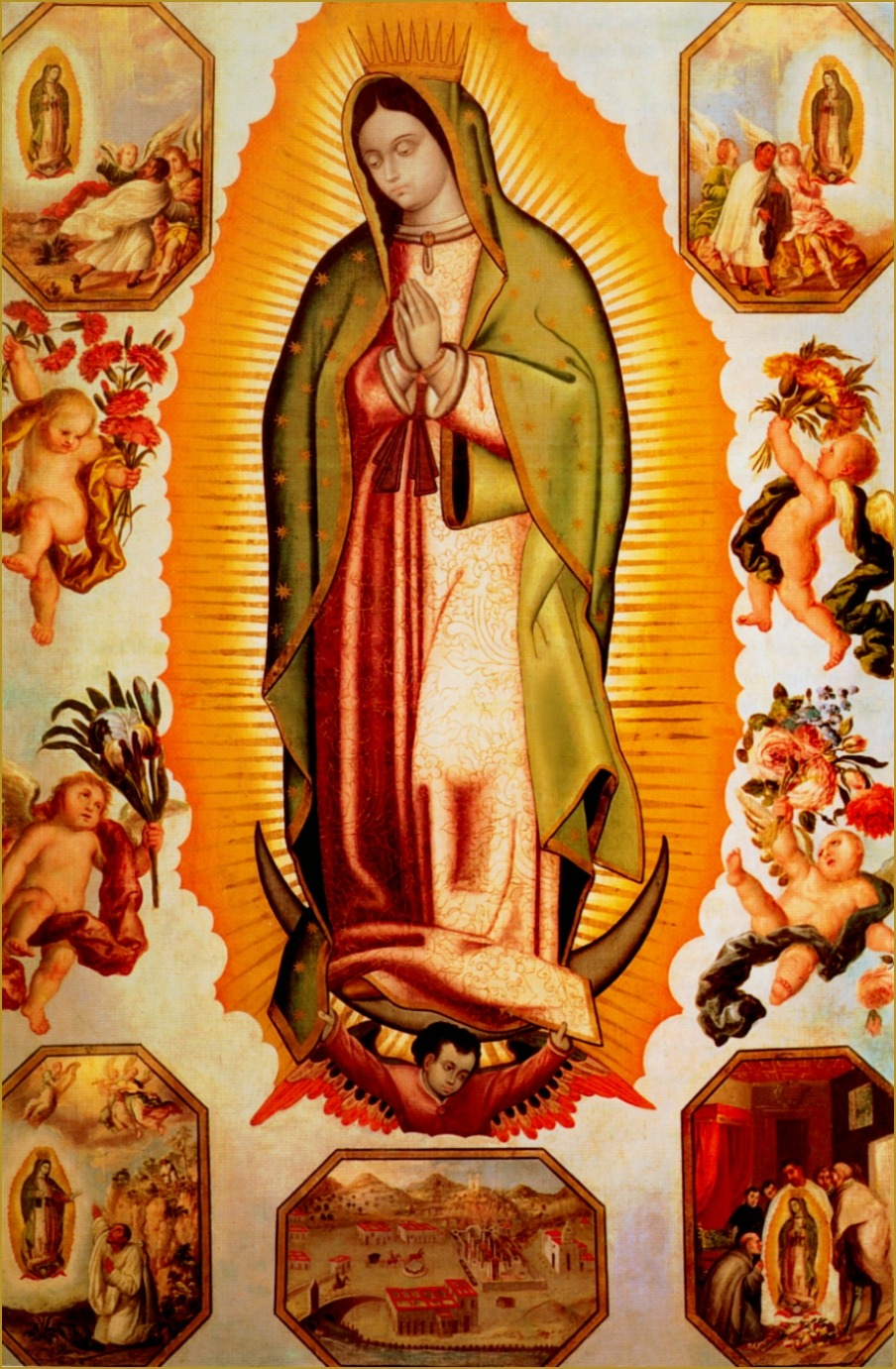
OUR LADY OF GUADALUPE - FEASTDAY 12 THE DECEMBER


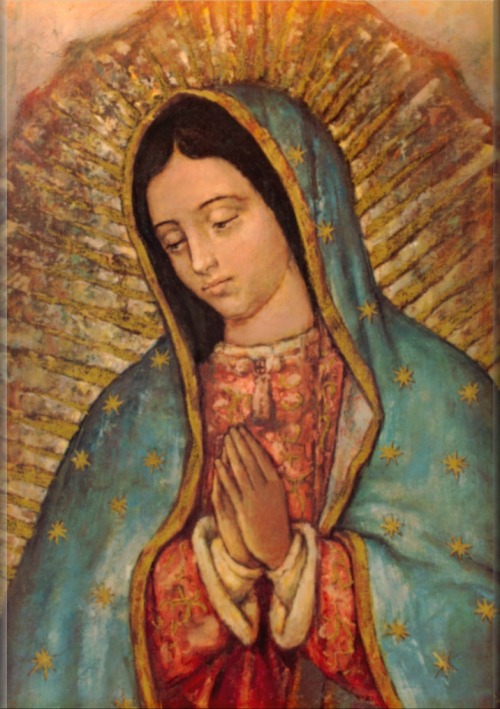
Today is the Feast Day of Our Lady of Guadalupe, let us recall the way Mary our Mother, entered the life of Juan Diego in such an extraordinary way.
As our mother, she wants to come into each of our lives, too.
Reflect on Mary’s place in your life and how you have opened your heart to her.


Thursday, December 10, 2015

POPE ST GREGORY III - FEASTDAY 10TH DECEMBER

Gregory was a Syrian and was the last non-European Pope until the election of Pope Francis in 2013, which was 1,272 years later.

He was just standing there, not doing anything special. As a Syrian priest he must have felt a little out of place among the Roman people mourning that day for the dead Pope. As a good preacher, he must have wanted to speak to the funeral procession about Christ’s promise of resurrection. As a learned man, he must have wondered who would follow the holy Saint Gregory II as Pope and where he would take the Church. As a holy man, he must have been praying for Gregory II and for all the people around him to find their place after death in God’s arms. But he was just one of the crowd.

Not to God. And not to the people who recognized the well-known holy man in their midst. Right in the middle of the funeral procession they singled him out. They swept him away and clamored for him to be named the next bishop of Rome. Then suddenly, unexpectedly, without his even lifting a finger, his whole life changed and he could no longer just stand there and do nothing. 

Wednesday, December 9, 2015

ST JUAN DIEGO - FEAST DAY 9TH DECEMBER

The bishop was kind but skeptical. He asked Juan to bring proof of the Lady’s identity. Before Juan could go back to the Lady, he found out his uncle was dying. Hurrying to get a priest, Juan missed his meeting with the Lady. The Lady, however, met him on his path and told him that his uncle had been cured.
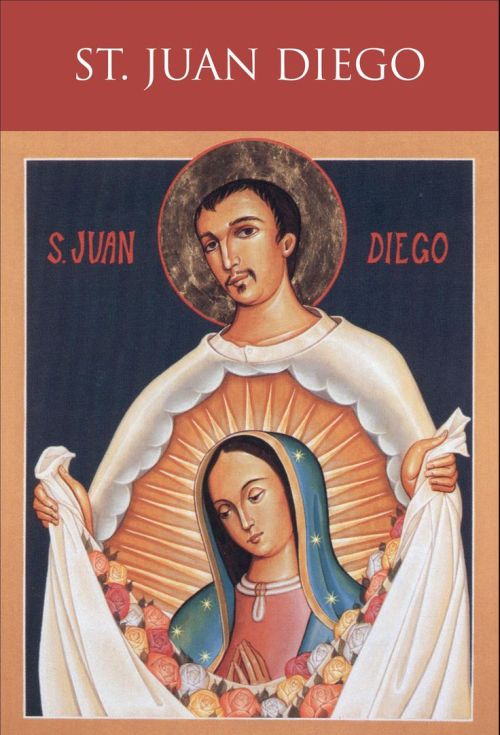
She then told Juan to climb to the top of the hill where they first met. Juan was shocked to find flowers growing in the frozen soil. He gathered them in his cloak and took them at once to the bishop.
Juan told the bishop what had happened and opened his cloak. The flowers that fell to the ground were Castilian roses (which were not grown in Mexico). But the bishop’s eyes were on the glowing image of the Lady imprinted inside Juan’s cloak. Soon after, a church was built on the site where our Lady appeared, and thousands converted to Christianity. Our Lady of Guadalupe was declared the patroness of the Americas. He died on May 30, 1548, at the age of 74. 

Saturday, December 5, 2015

ST SABAS THE ABBOT - FEASTDAY 5TH DECEMBER

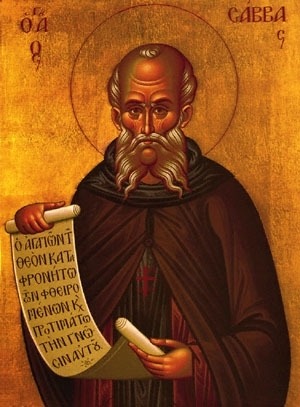
When he was eighteen, Sabas went to Jerusalem. He wanted to learn to live alone with God. He was advised to live in another monastery there for a while because he was still young. He obeyed and joyfully did all the hard work. He chopped wood for the fires and carried the heavy jugs of water. One day, St. Sabas was sent to Alexandria, Egypt, as the traveling companion of another monk. There he saw his father and mother! They tried their best to make him come with them. They wanted him to enjoy the same honours his father had won. Not Sabas! He would not even take the money they tried to give him. Finally he accepted three gold pieces. Then when he got back to the monastery, he gave them to the abbot.
At last, he was able to spend four years completely alone, as he desired. But after that, he had to start a new monastery. Many disciples came to him to learn how to be monks. Before long, he was put in charge of all the monks in Palestine. Sometimes Sabas was sent to the emperor on important Church affairs. Even then, he wore his poor cloth habit and kept to his hours of prayer.


Friday, December 4, 2015

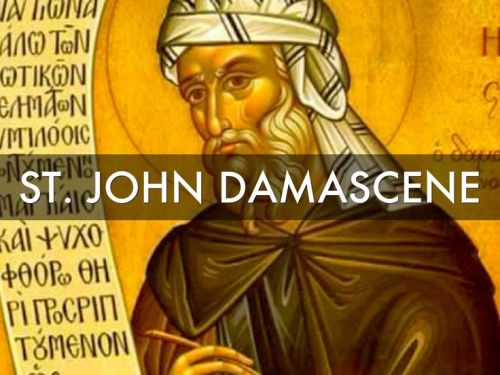
ST JOHN DAMASCENE - FEASTDAY 4TH DECEMBER


He is famous in three areas. First, he is known for his writings against the iconoclasts, who opposed the veneration of images. Paradoxically, it was the Eastern Christian emperor Leo who forbade the practice, and it was because John lived in Muslim territory that his enemies could not silence him. Second, he is famous for his treatise, Exposition of the Orthodox Faith, a summary of the Greek Fathers (of which he became the last). It is said that this book is for Eastern schools what the Summa of Aquinas became for the West. Thirdly, he is known as a poet, one of the two greatest of the Eastern Church, the other being Romanus the Melodist. His devotion to the Blessed Mother and his sermons on her feasts are well known. 

APOEM WRITTEN BY ST JOHN DAMASCENE

Lady! Queen! All-holy Mother! 
Christ my God was born of thee! 
In thy cause and for thy image
This right hand was lost to me. 

Why the Lion raged and ravened 
Thou in heaven above dost know; 
Help me, Lady! heal me quickly, 
Here before thee lying low!

Wonders oft at thy sweet pleading
Hath thy Son vouchsafed before; 
Heal my hand and let it praise Him–
Thee and Him for evermore!

Of His Faith and of thy honour
Still the champion let it be! 
What thou askest thou obtainest;
Christ my God was born of thee! 

- St John Damascene -